Leak Repair in Mountainside, NJ
Leaking pipes and fixtures can waste water and damage your home if left alone.
The drip under the sink started as a nuisance, then the cabinet smelled damp and the floor felt soft. Maybe you have water spots on a ceiling, a stain growing behind a wall, or a meter that keeps moving even when nothing is running. Leak problems rarely stay small for long, and the sooner they are checked, the easier they are to handle.
If you are seeing signs like a musty odor, bubbling paint, a damp patch near a fixture, or a puddle that keeps returning, it is time to have it looked at. Lantz's Mountainside Plumbing helps homeowners in Mountainside find the source of leaks and make straightforward repairs before the damage spreads.
Warning signs
Some leaks are obvious. Others hide until they leave behind clues that are easy to miss if you are not looking for them.
- Dripping sound: You hear water running when no tap, toilet, or appliance is in use.
- Stained surfaces: Brown, yellow, or dark marks appear on ceilings, walls, or around trim.
- Soft or swollen materials: Wood, drywall, or cabinetry may feel damp, warped, or spongy.
- Unexplained water use: A water bill or meter reading changes without a clear reason.
- Musty smell: A persistent damp odor can mean water is collecting where it should not be.
- Puddles near fixtures: Water reappears around a sink, toilet, tub, or appliance connection.
A leak does not always mean a major pipe failure. Sometimes the issue is a worn seal, a loose fitting, or a fixture connection that has started to fail. The key is catching the source before the affected area grows.
Common leak sources
Leaks can show up in more than one place around a home. Knowing the usual sources makes it easier to describe the problem clearly when you call.
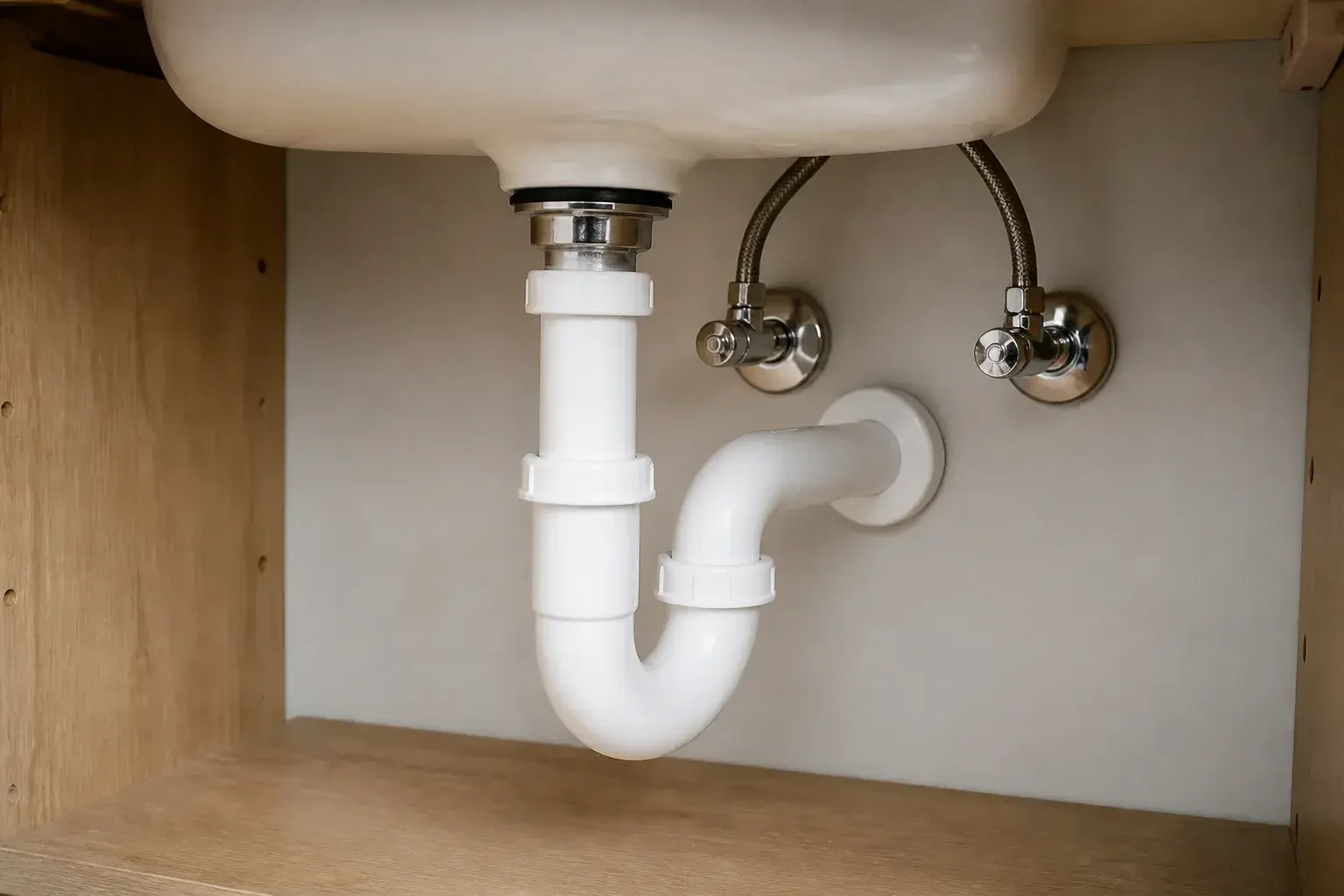
- Sink connections: Supply lines, shutoff valves, and drain joints can loosen or wear out over time.
- Toilet components: A cracked tank part, worn gasket, or loose connection can leave water pooling at the base.
- Tub and shower plumbing: Hidden leaks behind a wall can show up as stains, peeling paint, or damp flooring nearby.
- Water heater fittings: Small drips at connections or valves can spread moisture across floors and nearby surfaces.
- Exposed pipe joints: Basement or utility area pipes may leak at threaded fittings, couplings, or corrosion points.
Even a slow leak can cause repeated wetting that damages finishes and creates recurring cleanup problems. The location of the water is not always the source, which is why careful tracing matters.
What we check
When you call Lantz's Mountainside Plumbing, we focus on where the water is coming from and what needs to be repaired, not on guesswork. Leak work is often about narrowing down the exact failure point so the repair matches the problem.
We commonly look at:
- Visible plumbing joints: We check supply lines, drains, valves, and fittings for moisture and active dripping.
- Fixture seals: We inspect the parts where sinks, toilets, tubs, and showers connect and seal against surfaces.
- Affected areas: We look at nearby flooring, cabinets, walls, and ceilings for signs that help trace the path of the leak.
- Related components: When a leak appears around a fixture, the cause may be nearby rather than directly at the wet spot.
A homeowner can sometimes see the symptom first and assume the worst. In practice, many repairs are more targeted than that. Once we identify the issue, we can recommend a practical fix and explain what needs to happen next.
Our repair approach
A good leak repair should solve the source, not just dry the puddle. We take a straightforward approach so you know what is being fixed and why.
- Find the source: We trace the leak to the point where water is actually escaping.
- Assess the part: We determine whether the issue is a seal, fitting, valve, line, or fixture connection.
- Make the repair: We replace or tighten the failing part and stop the unwanted water flow.
- Check the area: We verify that the repaired connection is dry and working as it should.
This process helps avoid temporary fixes that leave the same problem coming back later. If the leak has already affected surrounding materials, we can also help you understand what should be monitored after the repair.
Signs it needs attention now
Some leaks are small, but they still deserve prompt attention because they can damage surfaces you do not see every day. If you are noticing any of the following, it is a good time to schedule service.
- Repeated dampness: You wipe up water and it returns in the same spot.
- Cabinet damage: The inside of a vanity or base cabinet shows swelling, staining, or a lingering odor.
- Ceiling marks: A leak above can show up as discoloration long before it becomes a larger visible problem.
- Loose fixture feel: A sink, toilet, or exposed pipe connection may shift slightly when touched.
- Constant meter movement: Water use that never settles can point to a hidden leak somewhere in the home.
If you live in Mountainside and notice these signs, it is worth addressing them before the affected area expands. A quick response often means a simpler repair and less disruption.
How visits work
Leak repair should feel clear from the first conversation to the final check. Here is what homeowners can expect when we come out.
1. Describe the symptoms
Tell us where you see water, what changed, and how long it has been happening. Small details help us narrow the likely source.
2. Inspect the area
We look at the visible plumbing and the surrounding surfaces to track where the moisture is coming from.
3. Repair the source
Once the failing part is identified, we make the needed repair and stop the leak at its source.
4. Review the result
We confirm the area is no longer leaking and explain what was fixed so you know what changed.
That simple, direct process works well for many common leak issues, from fixture connections to exposed pipe problems. It also helps homeowners make informed decisions without unnecessary upselling.
Local help nearby
Leak problems do not wait for a convenient time, and they can happen in any home, whether the issue starts under a sink, behind a wall, or around a water heater connection. Lantz's Mountainside Plumbing serves homeowners in Mountainside and nearby communities including Westfield, Springfield, Summit, and Scotch Plains.
Because leaks can travel, the visible water is not always the full story. A stain in one room may come from a fitting in another area, or a damp cabinet may point to a slow connection that has been dripping for a while. That is why careful diagnosis matters as much as the repair itself.
If you are trying to decide whether the issue is serious, look at how often it returns and whether the affected surface is getting worse. Repeated moisture, changing stains, or a steady drip usually means it is time to act.
Common questions
How do I know if a leak is hidden?
Hidden leaks often show up through stains, odors, warped surfaces, or water use that does not make sense.
Can a small drip really cause damage?
Yes, because even a slow leak can keep wetting the same area and affect wood, drywall, or flooring over time.
What if the water is showing up far from the source?
Water can travel along framing, pipes, or surfaces before it becomes visible, so the wet spot may not be the actual source.
Should I shut off water before the plumber arrives?
If the leak is active and you can do so safely, shutting off the affected fixture or main water supply can limit further damage.
Is a leak always inside a wall or ceiling?
No, many leaks are at exposed fixtures, visible fittings, toilets, sinks, or appliance connections.
What information helps when I call?
It helps to know where you first noticed the water, whether it is still happening, and if any surfaces have changed appearance or feel.
Get leak repair
If a leak is already making a mess, or if you suspect water is hiding where you cannot see it, do not wait for the damage to spread. Lantz's Mountainside Plumbing provides leak repair for local homeowners who want the problem found and fixed without guesswork.
Whether the issue is under a sink, around a toilet, near a water heater, or somewhere less obvious, we can help trace it and make the repair with care. For homeowners in Mountainside and nearby towns, straightforward leak repair starts with one clear next step.
How We Work
A Simple Plumbing Process
Every job starts with a close look at the issue and a clear explanation of what should happen next.
Check the Problem
We look at the affected fixture, drain, heater, or line to understand what is going on.
Explain the Options
You get a straightforward explanation of the repair or installation that makes sense.
Complete the Work
We finish the job carefully and leave your space clean.
FAQ
Common Plumbing Questions
If you have a plumbing question of your own, send it over and we will help you think through the next step.
How do I know if I need leak repair or a bigger plumbing fix?
It depends on where the leak is coming from and what caused it. An inspection helps determine the right repair.
Why is my drain slow even after I clear it myself?
Build-up can remain deeper in the line and keep causing backups. Professional drain cleaning can address the blockage more fully.
How do I know if my water heater needs replacement?
Frequent temperature issues, unusual noises, or poor hot water supply can point to a bigger problem. We can help evaluate what makes sense.
Can you replace old bathroom and kitchen fixtures?
Yes, fixture installation is a common part of what we do. It is a practical way to update worn or leaking plumbing parts.
What are signs of sewer line trouble?
Repeated backups, slow drains, and unpleasant odors can all be warning signs. Those issues are worth checking sooner rather than later.

Get started
Ready for Better Plumbing Help
Tell us what is happening at your home, and we will help you choose the right next step for repair or installation.